
What Is an Electric Golf Caddy? Types, Technology, and How to Choose the Right One
Walk into any pro shop and ask what an electric golf caddy actually is, and you'll get three different answers. Some golfers mean a motorized push cart. Some mean a fully remote-controlled caddy that drives itself alongside you. Others are picturing something closer to a robot that follows you down the fairway with GPS and a touchscreen.
They're all right. They're just describing different categories of the same idea.
An electric golf caddy is any battery-powered device that carries your clubs and reduces the physical effort of getting around the course, but "electric golf caddy" has become an umbrella term for several genuinely different pieces of technology. Some still require you to push. Others do the walking for you entirely.
This guide breaks down exactly what separates one type of electric golf caddy from another, what each one is actually built for, and which MGI model fits each category. If you've been searching for an electric golf cart, an electric golf trolley, or a remote control golf caddy and getting overwhelmed by the results, this is the page that sorts it out.
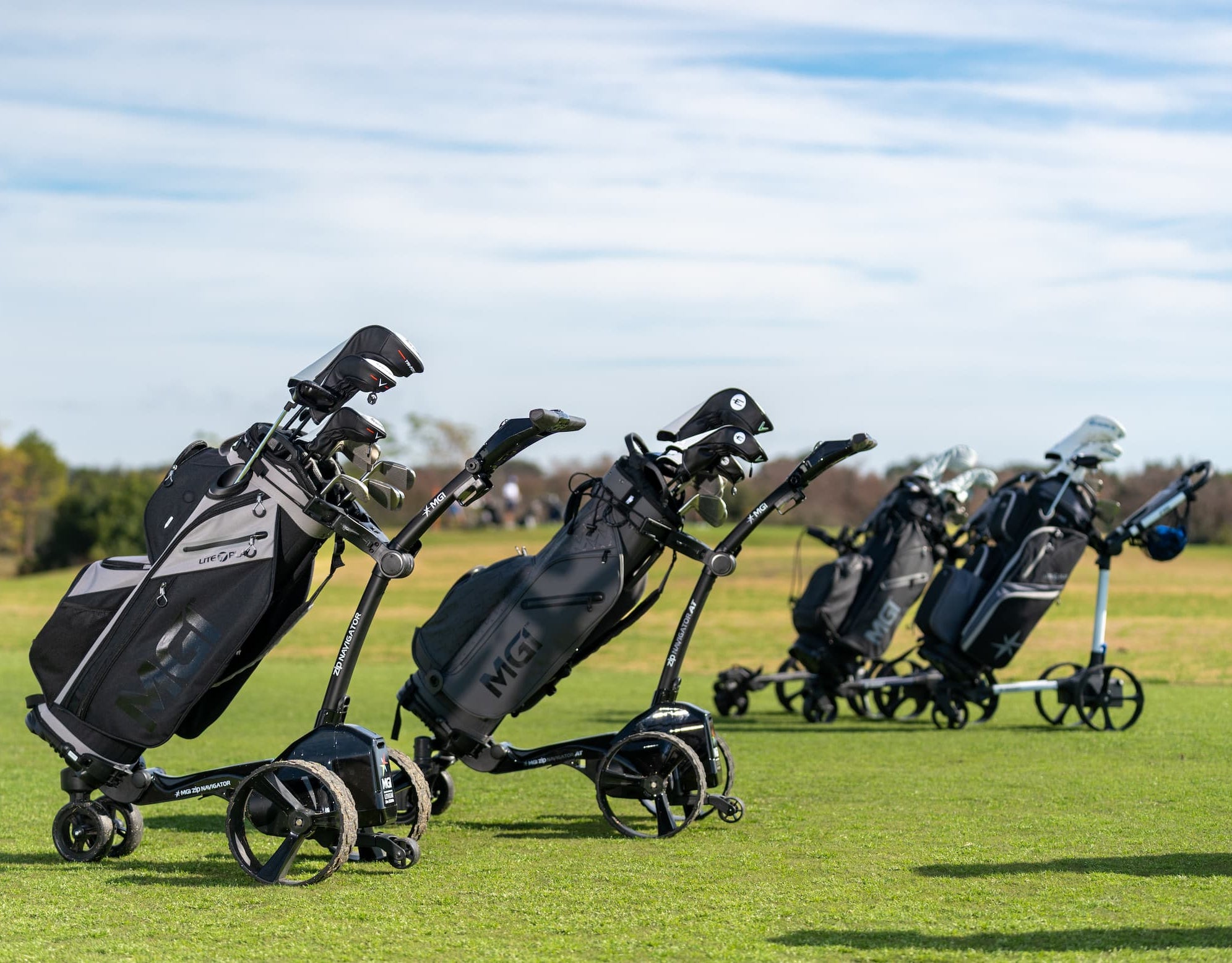
There are three main types of electric golf caddy on the market today.
The 3 Types of Electric Golf Caddies
1. Motorized / Power-Assist Push Carts
This is the entry point into electric assistance, and it's easy to misunderstand at a glance.
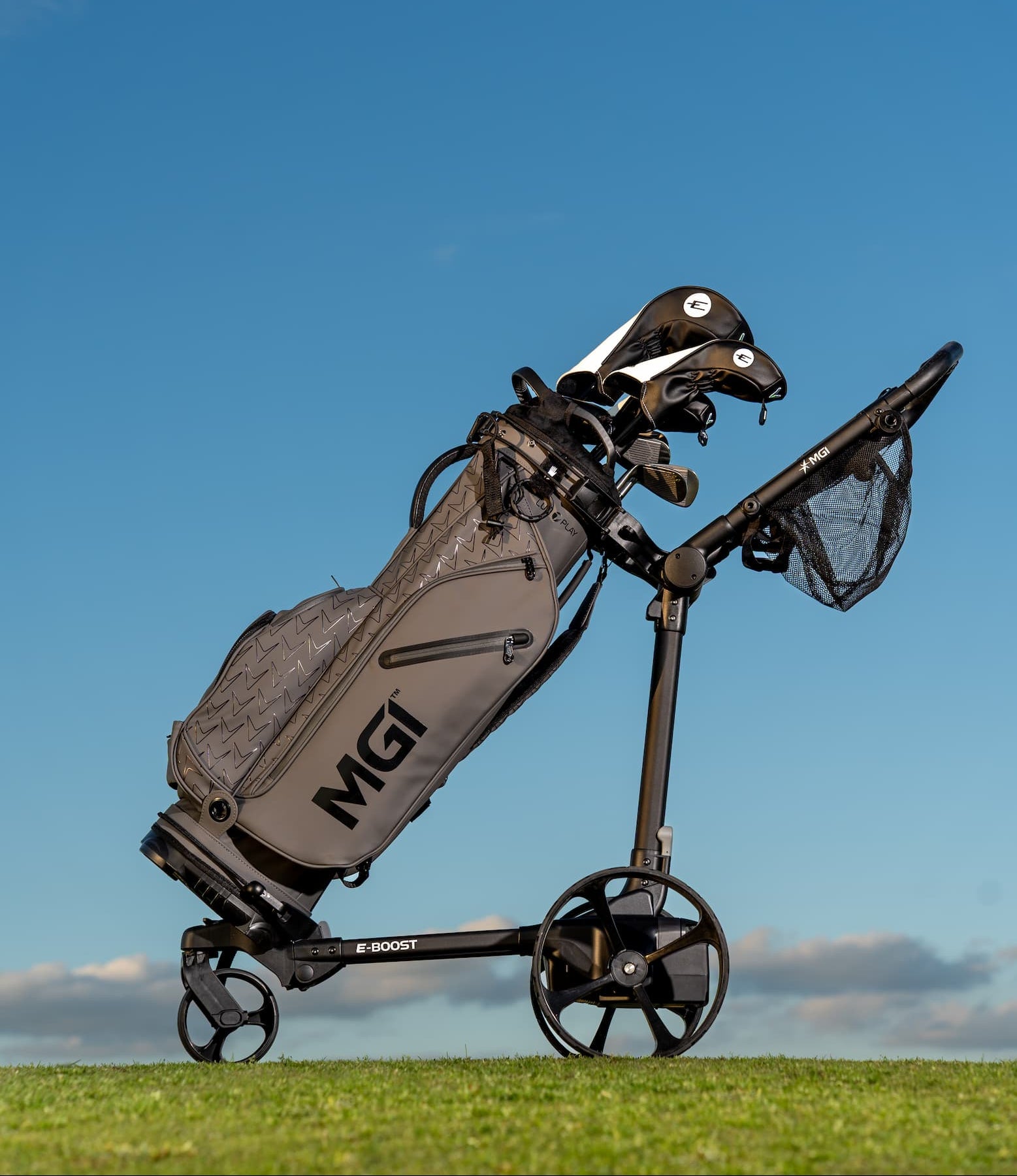
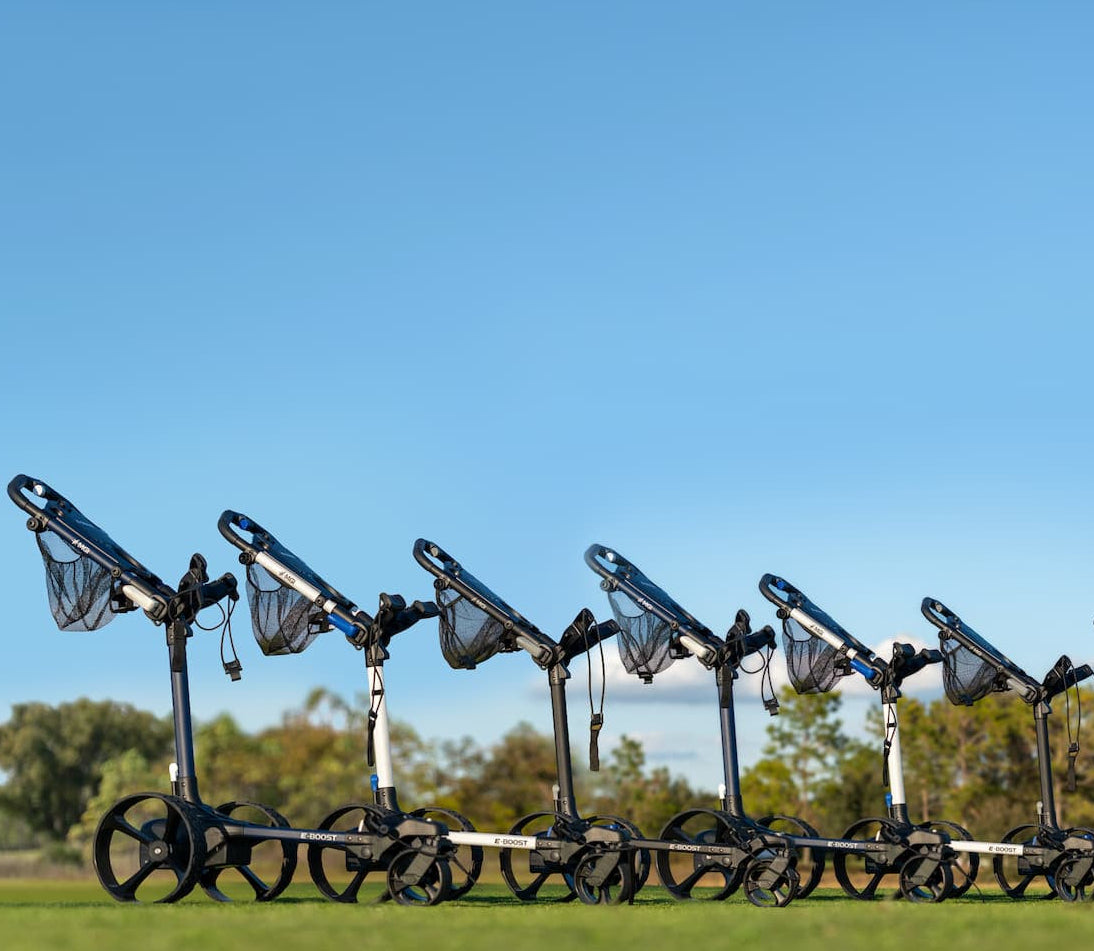
A motorized golf push cart looks and behaves like a traditional push cart. You still walk behind it. You still steer it. The difference is a hidden motor that kicks in on demand — usually with the press of a button on the handle — to help push the cart uphill or through the tougher stretches of a round.
Think of it as the difference between a regular bike and an e-bike. You're still doing the riding. The motor is just there when you need it.
What it's built for: Golfers who like the rhythm and feel of pushing a cart but want the option of an extra boost late in the round or on hilly holes, without stepping fully into remote control territory.
MGI's version: The E-BOOST is a traditional push cart with a hidden 240W brushless motor built in, giving you push-cart simplicity with a kick of power exactly when you need it.
2. Remote Control Electric Caddies
This is what most golfers picture when they hear "electric golf cart" or "remote control golf caddy,” and it's the category that made electric caddies mainstream in the first place.
A remote control electric caddy is fully self-propelled. You don't push it at all. You walk beside it while a handheld remote controls speed, direction, and stopping. Technology like gyroscopic straight tracking keeps the caddy running true across slopes, while automatic downhill braking stops it from getting away from you on descents.
There's no GPS, no touchscreen, and no AI decision-making in this category. It's purely about handling propulsion — and doing it exceptionally well.
What it's built for: Golfers who want zero physical effort managing their equipment but don't need course data or hazard mapping built into the cart itself. For many golfers, this category hits the sweet spot between simplicity and full hands-free walking.
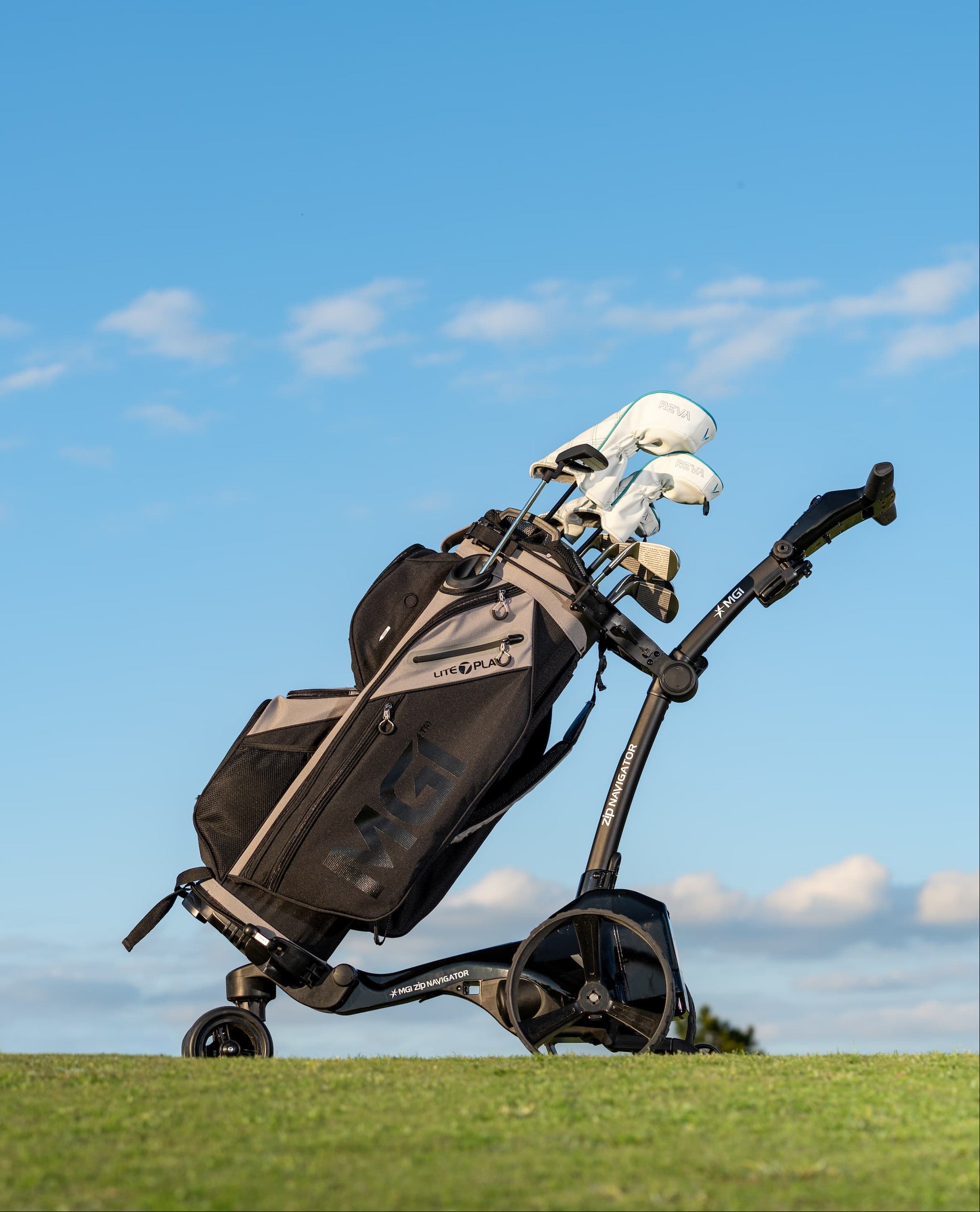
MGI's version: The Zip Navigator and Zip Navigator AT — with full directional remote control, patented Gyroscope Straight Tracker technology, and downhill speed control, with the AT built specifically for tougher, more varied terrain. The Zip Navigator AT is also the only model available through MGI Custom Studio, if you want to build a caddy that looks as good as it performs.
3. GPS / AI-Powered Caddies
This is the newest and most advanced category, and the one reshaping what golfers expect from an electric golf caddy going forward.
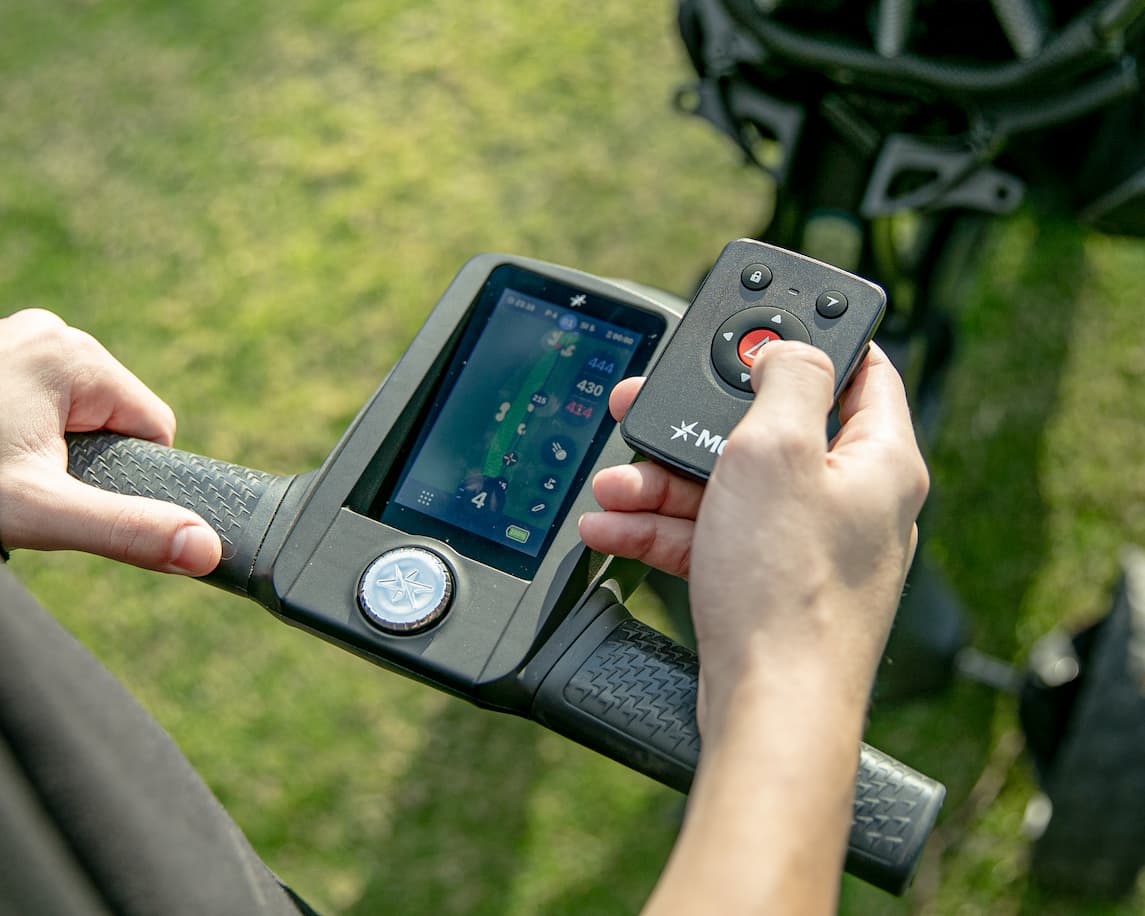
A GPS or AI-powered caddy does everything a remote control caddy does, then layers in course intelligence. That typically means built-in GPS with preloaded course maps, a touchscreen for distance and hole information, and (in the most advanced systems) AI-assisted hazard detection that can slow, stop, or reroute the caddy automatically near bunkers, water, or out-of-bounds areas.
Some models in this category also introduce Follow Mode, using sensors to track the golfer directly instead of relying on remote input at all.
What it's built for: Golfers who want the most technologically advanced walking experience available — GPS, rangefinder integration, and hazard awareness built directly into the caddy, not tracked separately on a watch or phone.
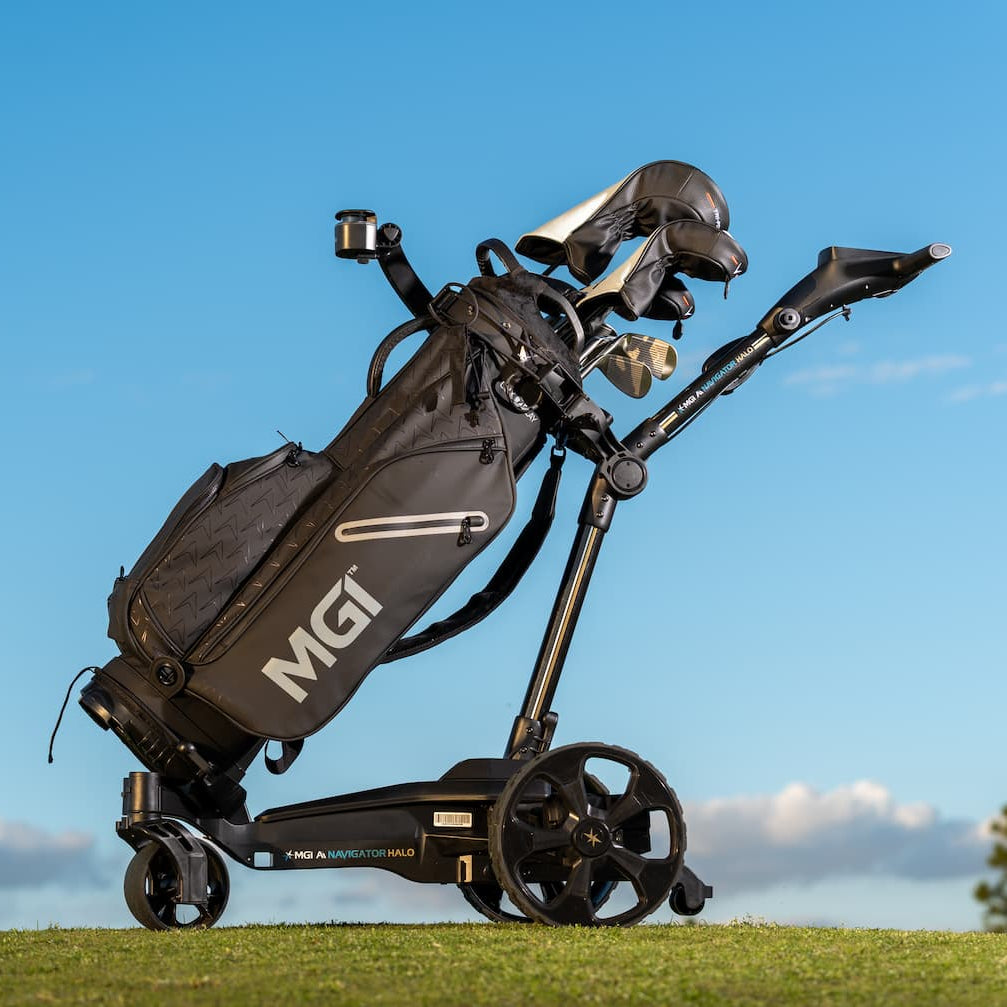
MGI's version: The Ai Navigator Halo features GPS access to 40,000+ courses, Geo Protect AI hazard navigation, a 4-inch all-weather touchscreen, SureShot SlimPRO rangefinder integration, and Halo Eye for Follow Mode tracking. Right now, this is as close as the industry gets to an electric golf caddy that can think for itself.
Types at a Glance
| Comparison | Motorized Push Cart | Remote Control Caddy | GPS / AI Caddy |
|---|---|---|---|
| Also searched as | motorized golf push cart, electric push cart | remote control golf cart, electric golf caddy with remote | ai golf caddy, robotic golf caddy, gps golf push cart |
| Do you push it? | Yes, with a built in power boost | No | No |
| Best for | Golfers who like walking and pushing but want help on hills | Golfers who want zero physical effort, no GPS needed | Golfers who want GPS, hazard mapping, and course intelligence built in |
| Typical price range | Entry level | Mid-range | Premium |
| MGI model | E-BOOST | Zip Navigator / Zip Navigator AT | Ai Navigator Halo |
Full Feature Comparison: MGI Across All Three Categories
| Feature | E-BOOST | Zip Navigator (AT) | Ai Navigator Halo |
|---|---|---|---|
| Category | Power-assist push cart | Remote control electric caddy | GPS / AI electric caddy |
| Control | Push + boost button | Full directional remote | Remote + AI navigation |
| GPS | No | No | Yes — 40,000+ courses |
| Geo Protect AI hazard navigation | No | No | Yes |
| Touchscreen | No | No | 4" all-weather |
| Gyroscope Straight Tracker | No | Yes | Yes |
| Downhill speed control | No | Yes | Yes |
| Rangefinder pairing | No | No | SureShot SlimPRO |
| Personalization | — | Custom Studio (AT only) | — |
| Battery range | Up to 14 Holes dependent on playing conditions | Up to 36 holes | Up to 36 holes |
How to Choose the Right Type for You
Three questions get most golfers to the right category quickly.
Do you want to keep pushing, or not push at all? If you enjoy the physical rhythm of pushing and just want help on hills or late in the round, start with a motorized push cart. If you don't want to push at all, look at a remote control or GPS/AI caddy instead.
Do you want GPS and hazard data built into the caddy itself? If you're happy using a separate watch or app for distances, a remote control electric caddy already gives you everything you need for propulsion. If you want course maps, distances, and hazard awareness on the caddy itself, a GPS/AI caddy is the right category.
What terrain do you play most often? Hilly, uneven, or all-terrain courses benefit most from models with gyroscopic tracking and downhill braking. This is standard on MGI's remote control and GPS/AI caddies, and available as the AT variant for the toughest conditions.
If you're still not sure, MGI's Find Your Caddy quiz walks you through it in under a minute.
Frequently Asked Questions
What is an electric golf caddy?
An electric golf caddy is a battery-powered device that carries a golfer's clubs around the course, reducing or eliminating the physical effort of pushing a traditional cart. The category includes motorized push carts, fully remote-controlled caddies, and GPS/AI-powered models.
Is a golf caddy the same as an electric golf caddy?
Not exactly. "Golf caddy" traditionally refers to a person who carries clubs and gives advice during a round. "Electric golf caddy" refers to the motorized equipment that performs the carrying function instead — no human caddy required.
What's the difference between an electric golf cart and an electric golf trolley?
Nothing functional — "trolley" is simply the more common term in the UK, Australia, and Canada, while "cart" and "caddy" are used more often in the US. They describe the same category of product.
What's the difference between a motorized push cart and a remote control electric caddy?
A motorized push cart still requires you to push and steer it, with a motor assisting your effort. A remote control electric caddy drives itself — you walk beside it and control it with a handheld remote, with no pushing required.
Do electric golf caddies work on hilly courses?
Yes, though capability varies by type. Remote control and GPS/AI caddies with gyroscopic tracking and downhill speed control are built specifically to handle slopes and uneven terrain without running away from the golfer.
Which type of electric golf caddy is best for beginners?
Remote control electric caddies tend to be the easiest starting point — simple controls, no pushing, and no additional GPS or app setup required. Golfers who still want to walk and push traditionally, with occasional power help, are usually better suited to a motorized push cart instead.
Final Thoughts
"Electric golf caddy" isn't one product. It's a category with three distinct answers to the same question: how much of the walk do you want to hand off?
If you still want to feel connected to pushing your own cart, a motorized push cart like the E-BOOST gives you that with power in reserve. If you want the equipment handled completely, a remote control caddy like the Zip Navigator removes the physical effort entirely. And if you want GPS, hazard awareness, and course intelligence built directly into your walking experience, the Ai Navigator Halo is built for exactly that.
No matter which category fits how you play, MGI builds for all three.
Shop the MGI Ai Navigator Halo
Or take the MGI Find Your Caddy quiz to discover which walking experience fits your game best.