You’ve probably been using the same golf push cart for a while. It’s reliable. It does what it’s supposed to do. And for a long time, that was enough. But at a certain point, the question starts to shift — not just whether your push cart is working, but whether it’s still the right fit for the way you play today.
For a lot of golfers, that shift happens gradually. You start playing more often. You notice how you feel late in the round. Certain courses start to feel more demanding than they used to. None of this means your current cart is failing. It just means your game — and your expectations — are evolving.
This guide outlines the eight signals worth paying attention to, and how to think about your next step in a way that fits your game long-term.
Sign 1: You’re Playing More Rounds and Need a Better Golf Push Cart
Start with frequency. If your schedule has moved from occasional rounds to consistent play, your relationship with your equipment changes. What worked for 10–15 rounds a year can feel very different at 30 or 40.
Over time, the physical side of pushing adds up. Not dramatically in a single round, but cumulatively across a season. At this point, it’s worth asking whether your golf push cart setup is helping you sustain that level of play — or quietly working against it.
Sign 2: Hills Are Changing the Way You Experience the Course
Every course has its own personality. On flatter tracks, a traditional golf push cart feels effortless. On more demanding terrain, the experience changes. Hills introduce a different kind of strain. At times, it can feel like you and the course are pitted against one another — and that can start to shape how you feel about certain layouts.
If you find yourself thinking about the walk as much as the golf, or avoiding certain courses altogether, that’s a signal. Not that the course is the problem, but that your current setup may not be keeping up with it.
Sign 3: Fatigue Is Showing Up Late in the Round
Most golfers don’t notice fatigue all at once. It shows up in smaller ways.
A swing that feels a little off. Decision-making that isn’t as sharp. Less patience over putts. A general sense of wanting to finish rather than compete. Some of that is just part of playing 18 holes — but some of it is avoidable.
When the physical effort of getting around the course starts to affect how you play it, it’s worth paying attention. Upgrading to a best electric golf push cart option can help you arrive at each shot fresher and more focused.
Sign 4: Your Body Is Starting to Give You Feedback
This one is straightforward. If you’re noticing consistent tightness, soreness, or strain that lines up with how often you’re walking and pushing, it’s worth taking seriously.
Golf is one of the few sports people can play for decades, but that longevity depends entirely on how you manage the physical side of it. Adjusting your golf push cart setup doesn’t mean stepping away from walking. In many cases, it’s what allows you to keep doing it.
Sign 5: You’re Thinking About Long-Term Walking
At some point, the question shifts from “Can I do this?” to “How long can I keep doing this the way I want to?” That’s a good question to be asking.
If walking is an important part of how you experience the game, it makes sense to think about what will help you sustain that over time. Not just this season, but over the next decade or more. The right electric golf push cart can be the equipment decision that extends your walking game for years.
Sign 6: Conditions Are Starting to Matter More
Heat, humidity, rough terrain — these factors significantly affect how much effort it takes to get through a round.
What feels manageable in mild conditions can feel very different in a demanding environment like a hot summer round in the South or a hilly links-style course. If you’re noticing that certain conditions are wearing you down more than they used to, that’s another signal your golf push cart setup may need to evolve.
Sign 7: You’re Considering a Ride Instead of Walking Your Golf Push Cart
This is usually the clearest sign. If you enjoy walking but find yourself considering a riding cart more often — not out of preference, but out of necessity — it’s time to look at upgrading your current setup.
In many cases, it’s not that you’ve stopped wanting to walk. It’s that your current golf push cart is making it harder to justify. A power-assist or electric golf push cart option can close that gap and keep you on foot.
Sign 8: Your Game Has Evolved — Your Golf Push Cart Should Too
Golfers upgrade clubs, shoes, and technology all the time — but carts tend to stay the same for years.
At a certain point, that imbalance shows up. Your equipment evolves, but the thing you rely on every single round doesn’t. Sometimes it’s subtle. The cart doesn’t roll quite as smoothly. It feels a little less stable. It still works, but not the way it used to.
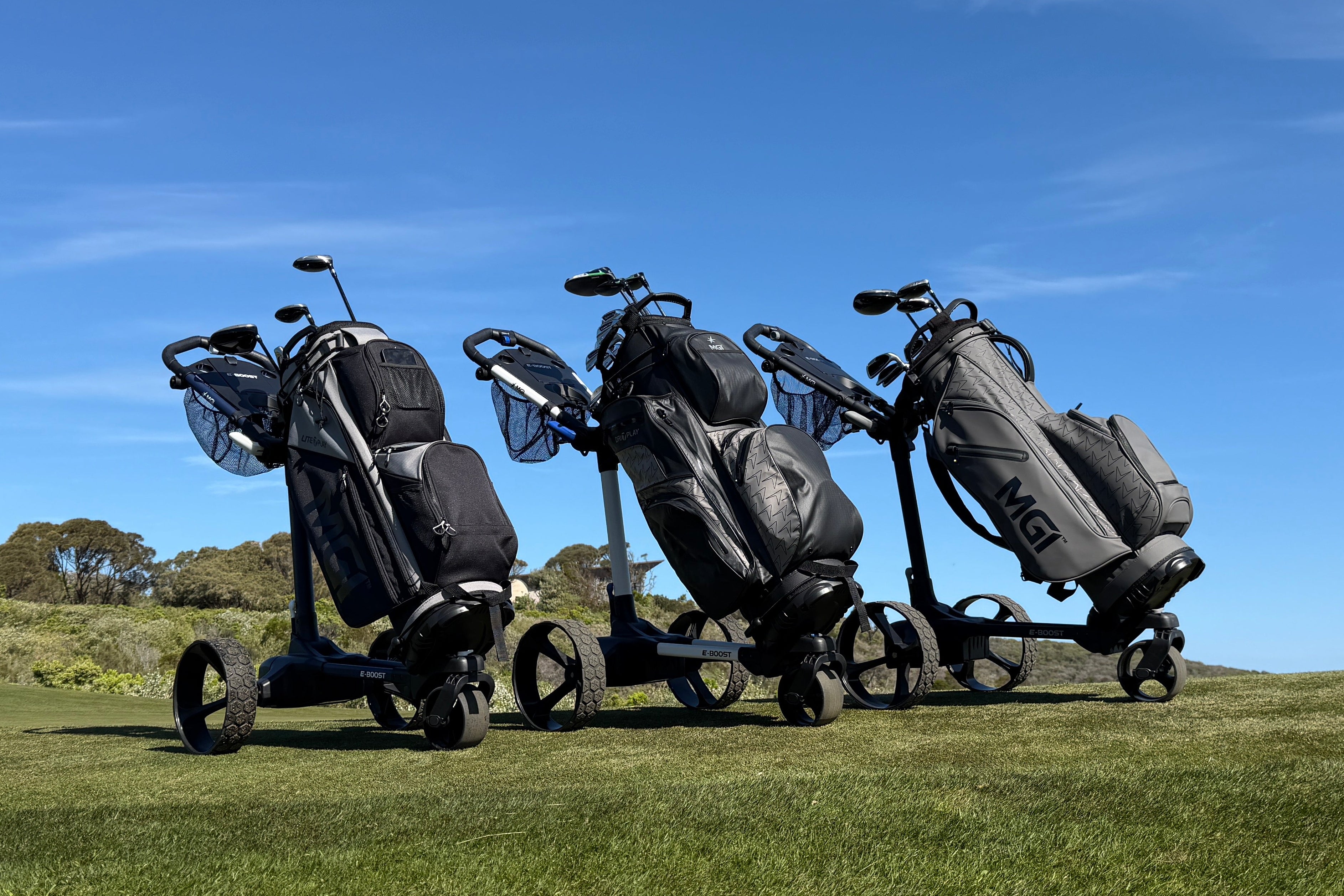
If everything else in your game has moved forward, it might be time for your golf push cart to do the same. Ready to upgrade? Discover the MGI E-BOOST golf push cart and what it can do for your walk.
What Are Your Golf Push Cart Options?
Once you recognize these signals, the next step isn’t jumping to a product. It’s understanding what kind of experience you want moving forward.
Broadly, there are three directions most golfers consider:
Stay Manual
If you still enjoy the physical side of pushing and it isn’t affecting your play or your body, a high-quality golf push cart still makes sense. A manual cart is lighter, simpler, and a solid choice for golfers who play on flatter courses or prefer a fully hands-on experience.
Add Power Assist with an Electric Golf Push Cart
Some golfers want to stay fully engaged in walking, but want support in specific moments — hills, long stretches, or late in the round when fatigue sets in.
That’s exactly where the MGI E-BOOST push cart comes in. It’s an electric golf push cart designed to support your walk, not replace it. The E-BOOST provides power assistance on demand, so you stay in control while taking the strain off your body where it matters most. It’s the ideal bridge between a traditional push cart and a fully self-propelled caddy.
Move to a Full Electric Caddy
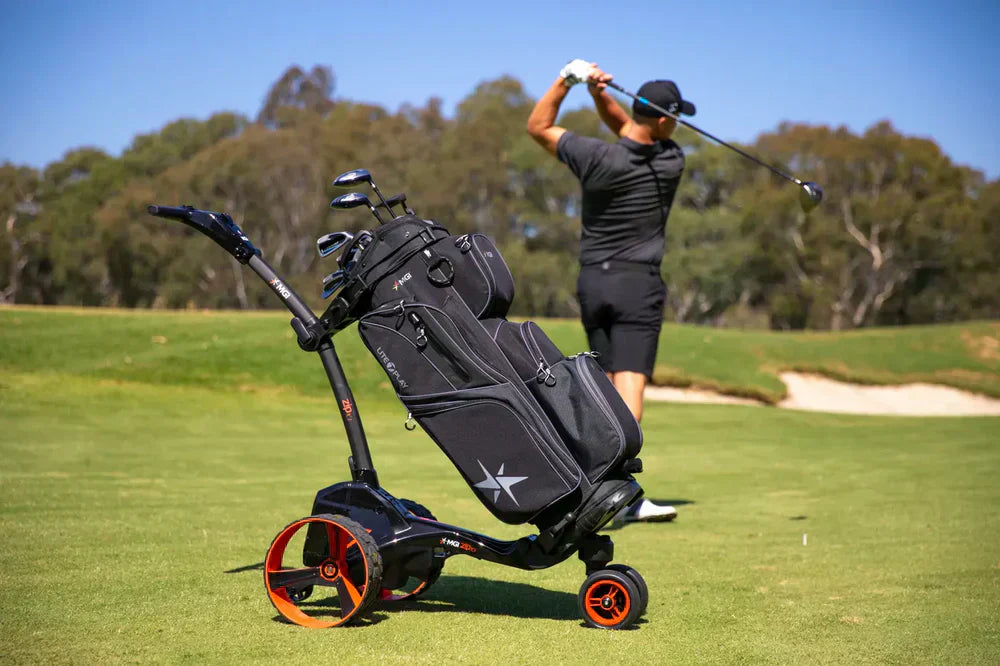
Others prioritize reducing physical strain as much as possible. Full electric caddies like the MGI Ai Navigator GPS+ take over most of the work and can be especially useful for frequent play, demanding courses, or long-term sustainability. You can also compare all MGI caddy models side-by-side to find the right fit for your game.
Each approach is valid. The right one depends on how you want to experience the game.
The Real Question
The decision is more about intent than technology.
- Do you want to stay closely connected to the physical side of walking?
- Do you want to reduce strain while staying engaged with the round?
- Or are you ready to prioritize ease and efficiency above all else?
There’s no wrong answer — but being clear about that answer makes the next step obvious. Your current golf push cart probably served you well, and it may still. If you’re noticing that it’s starting to limit how you play, how you feel, or how often you walk, that’s worth addressing.
Upgrading is much less about chasing features and more about making sure your equipment matches the way you actually play the game today — and more importantly, the way you want to keep playing it.
Frequently Asked Questions About Golf Push Carts
Q: What is the difference between a golf push cart and an electric golf push cart?
A traditional golf push cart is manually operated — you push it by hand around the course. An electric golf push cart uses a battery-powered motor to provide assistance or full self-propulsion, reducing the physical effort required to walk 18 holes. Options range from full self-propelled electric caddies to hybrid models like the MGI E-BOOST that provide power assist on demand.
Q: When should I upgrade from a manual to an electric golf push cart?
The clearest signs are fatigue late in the round, soreness after playing, avoiding certain courses due to terrain, or finding yourself considering a riding cart more often. If your current golf push cart is limiting how often or how well you play, an electric golf push cart is worth considering.
Q: What is the best electric golf push cart?
The best electric golf push cart depends on how you play. For golfers who want to stay physically engaged but get help on hills and long stretches, a power-assist cart like the MGI E-BOOST is an excellent choice. For golfers who want full hands-free operation, remote-control electric caddies like the MGI Ai Navigator GPS+ are top-rated options. You can compare all models here.
Q: How long do electric golf push cart batteries last?
Most quality electric golf push cart batteries last 18–36 holes on a single charge depending on terrain, cart model, and battery capacity. MGI’s lithium-ion batteries are designed for consistent performance across full rounds. Learn more about MGI battery care and maintenance to extend battery life over time.
Q: Can I ride instead of using a golf push cart?
Yes — but for many golfers, upgrading your golf push cart to an electric model is a better middle ground. Walking is widely recognized as one of the health benefits of golf, and a power-assist or electric golf push cart lets you keep walking comfortably without the strain that leads most golfers to consider a riding cart in the first place.
Ready to Find Your Next Golf Push Cart?
Whether you’re looking for a power-assist electric golf push cart or a full self-propelled caddy, MGI Golf has a range of options built for every type of walking golfer.
- Shop the MGI push cart range
- Explore the MGI E-BOOST electric golf push cart
- Compare all MGI caddy models
- See the full electric caddy range
You can’t control how demanding the course is. But you can control how well-equipped you are to handle it.